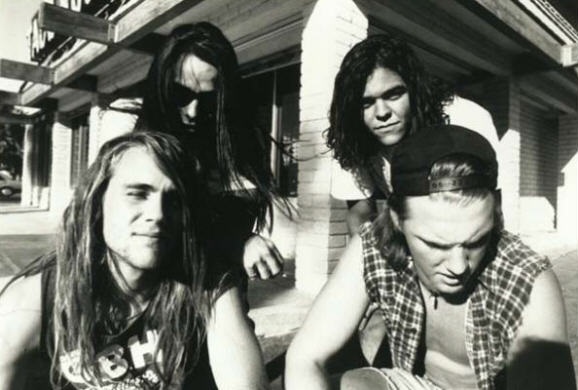
WatchTower, from Austin, Texas, was one of, if not the first technical metal band, and they're frequently cited as influences by just about every tech metal band of the last 20 years. Their first album dates back to 1985, and it's just mind blowing when you consider what was going on in music at that time. The playing is frenetic and hyper-adventurous, fast, thrashy and insanely difficult, as their songs feature frequent meter changes at breakneck speed. The vocals suit the style as they're high-pitched and wild. Vocalist Jason McMaster went on to semi-fame with moderate hair band hits "Teas'n Pleas'n" and "Scared" in 1989 with his other band Dangerous Toys.
"Meltdown", in an earlier form, was the first WatchTower song ever to appear on a recording, that being a 1983 Texas metal compilation. It later appeared again, re-recorded, on their 1985 self-funded debut album, Energetic Disassembly. It's representative of their style during their two-album lifespan: hard, fast and wild technical progressive thrash. Keep in mind this is from almost 30 years ago and on a minuscule budget, and just enjoy this jaw-dropping and fun piece of work.
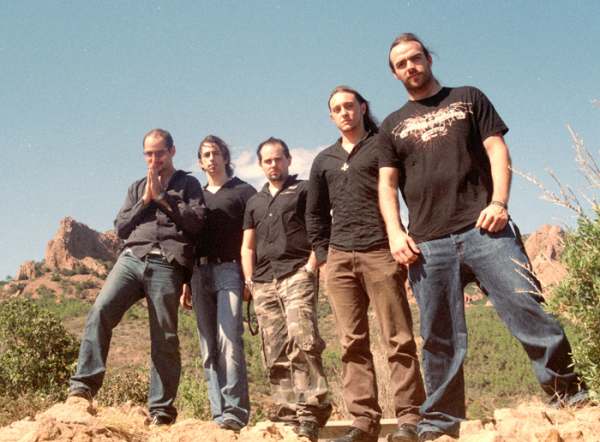
Spheric Universe Experience is a relatively recent band (by my standards anyway), having released their debut album only 8 years ago. I first heard them on their follow-up, Anima, and as is often the case with my introduction to a band, it remains my favorite of their albums. S.U.E.'s music is not too out of the ordinary, being firmly placeable in the progressive-power metal style, with a bit of a lean more toward the prog than the power. As with the likes of Adagio, Angra and Symphony X, there's a lot of synth orchestration, shifty time signatures, squealing guitar harmonics and very tight playing.
As stated, Spheric Universe Experience's style of music isn't unique, but it's a favorite style of mine, and they sure do it well. And what is unique is that they're the only entry in my top 100 favorite metal bands from France. Give a listen to the pristine and enjoyable "Sceptic" off of their sophomore album Anima. There are some neat tricks like the muted introduction that sets up the full-tilt entrance of the main opening riff and the mathematical time shifts that occur throughout the song. The playing's impressively precise, and it's also simultaneously heavy and melodic, and as such, could have broad appeal.
Anacrusis came out of St. Louis in the late 80s and rose to power in the early 90s, secretly keeping the metal flame lit during those dark days. They were probably first and foremost a hard-charging thrash band, but they also possessed some veiled subtlety, and some unusual and interesting writing in their tonal, rhythmic and phrasing. They kind of remind me of a blend of three classic and varied bands: Metal Church (power), Testament (thrash) and Voivod (prog).
I think Anacrusis hit their high point with 1991's Manic Impressions. It's such a great album from start to finish. Their follow-up (and sadly final) album Screams and Whispers is also outstanding. It's tough to pick a favorite song to share with you, but at least there's no chance of picking a loser. I'm just going with the opener. Check out the energy, the quirky writing, the great drumming and the awesome, other-worldly vocals from this woefully under-appreciated classic progressive-thrash metal act.
Ok. So have you heard of these guys? This band out of Toronto, Canada was one of the first, and certainly one of the most influential, progressive metal bands. While there were bands playing something akin with some hard progressive rock earlier, a la King Crimson and Yes, and there were other bands who got around to metal a little bit earlier (ahem... Black Sabbath), Rush may have been the first to put it all together with great musical and commercial success. They had a remarkably consistent string of terrific albums from their more straightforward eponymous debut, featuring the hit "Working Man", in 1974 through eight albums in eight years culminating in 1981's Moving Pictures. Of course there have been many Rush albums since then, and for the most part, they've been adventurous and interesting (at least the bits I've heard), but I think few would argue that those first eight weren't something special.
I'm including "The Trees" from 1978's Hemispheres here, since it's one of my favorites (although they have so many good songs, it's hard to pick one). It's a fair representation of Rush's compositional style in those years, particularly the complex layering of parts, the impressive fullness of only a trio of musicians, and the use of departure from and later return to earlier-established musical themes. It also shows drummer Neil Peart's characteristically and impressively busy drumming (remember this was the 70s) and thoughtful lyric writing. You've heard it before, but enjoy Rush's "The Trees" again for old times sake.
In the early 1990s, Kyuss defined and perfected the rock sound of the desert of Southern California. While Seattle was flipping the bird to the world and perhaps more directly to the increasingly superficial music industry with the rise of grunge, Palm Desert was raising its own middle finger, but this one was dirtier under the nail, permanently bent at the knuckle and with skin leathery as hell. Kyuss' sound, and the genre of stoner rock that it helped spawn, captured the disconnected, disenfranchised sentiment of the grunge movement, but without the malaise. Instead, they opted alternately for an intense slow burn or a driving edge, with just a dash of imperfection to drive home the take-it-or-leave-it aesthetic. These guys were so talented, authentic and musically convincing that after their breakup in 1995, they went on to participate in many more bands that left a mark on rock music, most notably guitarist Josh Homme and his later band Queens of the Stone Age.
When I think of definitive driving-on-the-highway tunes, a handful come to mind: "Breaking the Law" by Judas Priest, "Highway Star" by Deep Purple, Corrosion of Conformity's "Clean My Wounds" (which we heard earlier) and this gem off of Kyuss' album Blues for the Red Sun. "Green Machine" is a tight little song with a great riff and an incredible groove. There are some cool details like the stuttering entrance of the second guitar at the beginning and the fuzzy tube amp sound that make the song work so perfectly, and the backing vocals are spot on. Here, Kyuss shows why they're so highly regarded and why legions of stoner rock bands followed their lead.
I was late to the game on this terrific band out of Raleigh, North Carolina, having first heard them about a year ago despite having read a lot of good press about them prior to that. It's been about 10 years since their first album, so to me and the glacial pace of my discovery of new music, they're a pretty new band. I have a feeling they'll be moving their way up my list of faves as I am exposed to more of their inventive music and virtuosic playing. It's hard to pin Between the Buried and Me into a specific subgenre, although they're unequivocally metal. Maybe schizo-metal would best describe it as they're all over the map. I suppose they'd be most accurately labeled progressive, with death a close second. But there's really everything here: thrash, instrumental, classic and alternative metal all get quite a bit of time at the forefront. And wow are they good. They play all styles with great understanding, technical facility and swagger.
Ants of the Sky was the first BTBAM song I heard, and it's a doozy. It leaps out of the blocks with an uptempo death-ish opening with guitar work reminiscent of Yngwie's blistering arpeggios and Children of Bodom's drive and screaming. It quickly gets artier with a jazzy instrumental segment from 0:41 to 1:52, passing through a soft keyboard pad to an anthemic heavy rock fanfare and back to the fast opening feel. The vocal sections are short; the song's really an instrumental epic with a few brief vocal bits of contrast. I know it's a long song, but give it a listen through for some really interesting juxtaposition of styles from all over the map (the biggest shocker of which is the old-style country at 11:45) and some truly impressive playing.
San Diego's Psychotic Waltz was never a widely-recognized band here in the States, but they developed something of a cult following on the back of their outstanding 1990 self-released debut album, A Social Grace. They went on to release three more albums, the sophomore effort also self-financed and the final two on minor labels Zardoz and Intercord. Their underground popularity prompted (and was helped along by) Metal Blade Records, who in 2004 re-released all four albums along with some bonus material. It was around that time that I first heard them, and while sorry that I wasn't aware of them when they were active (and more importantly, touring), I'm sure glad I was fortunate enough to come across their music at all. In some ways they throw back to the early metal and hard rock sounds of Black Sabbath (with detuned guitars playing in octaves with the bass and a manic vocal style) and Jethro Tull (lead vocalist Buddy Lackey even features on flute from time to time). In fact I'd call those two bands, along with perhaps early Fates Warning, their main musical influences. The four albums are solid efforts throughout, with the first two being the heavier and more progressive metal, and the latter two a bit more atmospheric and polished. According to their website, they reunited a couple years ago and a new album is in the works.
My favorite Psychotic Waltz album is also the rawest, their debut A Social Grace. It's packed with 13 varied, creative and thoroughly enjoyable songs, all very enthusiastically performed. The song I'm including below - "In This Place" - is one of my favorites on the album, although all the songs are terrific with "I Remember" and "Spiral Tower" also deserving any additional online searching you might be willing to do. "In This Place" starts with a quick drum intro and an angular opening riff in 4. The verse enters shortly thereafter (0:29) in an odd and difficult 15/8 meter. And it just gets twistier through the chorus and then the bridge at 1:35, after which a half-time section leads into a jam over which a bizarre narrative is spoken and an equally bizarre guitar solo is played. Finally, the verse recapitulates at 3:22, followed by a final repetition of the chorus and a relentless instrumental outro to the exclamation point ending. This thing is a roller coaster ride start to finish; go ahead and strap in and give it a listen. I hope it's as fun for you as it is for me.
[Edit] - "In This Place" went away on YouTube, so I'm substituting the heavy "Spiral Tower" in its place for now. Enjoy!


.jpg)


%20bootleg.jpg)