Saturday, November 23, 2013

#53 - Andromeda


Andromeda, our fifth band from Sweden and eleventh Scandinavian band, is a top-flight pure progressive metal band.  Their writing is superb and the instrumental musicianship and chops are undeniable.  They've released five studio albums over their 12-or-so-year career, and I'm pretty familiar with the first four, which are of remarkably consistent quality.  You often expect a band to peak (usually early) and then spend the rest of their career trying desperately and in vain to recapture the magic of that pinnacle album.  Maybe it's because they've never really achieved much in the way of commercial success, but Andromeda doesn't seem to struggle with maintaining their excellent work.


I was going to include an instrumental track from their debut album, Extension of the Wish, called "Chameleon Carneval" (sic), which is an impressive display of chops, a fun listen and a favorite of mine.  Instead, I opted for the epic "Veil of Illumination", the finale of their fourth album called The Immunity Zone.  The song clocks in at over 17 minutes so be prepared.  I hope you have the time to give it a listen, as it showcases everything that makes Andromeda such a great band: virtuosic playing, heavy use and feature of keyboards, obvious jazz influence, insane drumming, a lighter fusion-y sound that makes the "metal" label just a bit questionable (kind of like fellow countrymen Pain of Salvation), and really interesting, twisty writing that holds the attention.

Monday, November 18, 2013

#54 - Iron Maiden


While there were several terrific bands during the genre's emergence from the primordial ooze of the early 70s, heavy metal music never really reached mainstream popularity until the movement known as the New Wave of British Heavy Metal (NWOBHM) took off right around the beginning of the 1980s.  Just as English metal stalwarts Black Sabbath, Led Zeppelin and Deep Purple were petering out, new bands like Saxon, Girlschool, Venom, Angel Witch, Motörhead and Def Leppard rejuvenated the metal sound and introduced it to a new and much wider audience.  Probably the most successful (and deservedly so) NWOBHM band both in the movement's heyday and over the subsequent years has been Iron Maiden.  After generating some underground buzz in the late 70s, they leapt to prominence with their charting eponymous debut in 1980.  As great as that, and their follow-up album Killers were, Maiden took an even larger step into the limelight in 1983 with their third album, The Number of the Beast, featuring new frontman Bruce Dickinson and never looked back.


As was true for a lot of people, the NWOBHM era was when I started listening to music in general and metal in specific: 1983 to be exact, which happened to be the year that Iron Maiden hit their stride.  If I'm honest, I've got to confess that I now actually prefer their first two albums, which featured vocalist Paul Di'Anno, and really established bassist and main composer Steve Harris' writing style and the band's up-tempo, galloping, punk-inspired metal sound.  They're start-to-finish terrific albums both and still stand as two of my favorite early-80s albums.  That said, there are a couple of songs on The Number of the Beast that were just jaw-dropping at the time.  The vocals were unlike anything I had heard to date and the sheer epic-ness the combination of sound and lyrics conjured seriously moved this pre-adolescent boy.  One of these was the album closer "Hallowed Be Thy Name", clocking in at a meaty 7+ minutes of pure sonic power.  The other was the title track which, while a more radio-friendly sub-5-minute song, still had similar epic qualities: the somber spoken biblical quote from Revelation, the gradual crescendo and interesting and unusual 10-beat phrases of the opening to the blood-curdling scream at the end of the intro, the characteristic galloping beat, the progression of melodic sections and they way they lead to one another, the impressive on-the-edge instrumental work - especially the bass work and guitar solos, and of course Dickinson's iconic vocals combine to rightfully make this one of the most well-loved metal songs in history.

Monday, November 11, 2013

#55 - Death


Floridian guitarist, vocalist and songwriter Chuck Shuldiner formed Death in 1983, and released their first album, Scream Bloody Gore four years later.  While it was not the polished effort they'd produce later in their career, it's pretty tight for such an ambitious departure from the norm of the day, and they have to be given credit for forging their own way as pioneers of the emerging death metal sub-genre.  In fact Chuck is rightfully regarded by many as the "Father of Death Metal".  During those early years and albums, Death essentially invented the death metal sound, characterized by growling vocals, virtuosic playing with a heavy emphasis on alternate picking and bombastic double-kick drumming, frequent time changes, chromatic harmonic progressions and atonality in the melodic writing.  But they really hit their stride in 1991 with the Human album.  By this point, Chuck had eschewed the idea of a band in the traditional sense altogether and recruited session musicians for recordings and tours.  On Human and subsequent albums, Death pursued more of a technical or progressive death metal approach (an approach that really didn't exist to that point), paving the way for hundreds of bands in one of the most interesting and impressive sub-genres of metal since.  Sadly, Chuck passed away in late 2001 after battling with brain cancer and pneumonia.


Death's more progressive releases include the afore-mentioned Human, and its successors, Individual Thought Patterns, Symbolic and The Sound of Perseverance, as well as an album under the moniker Control Denied, featuring similar music but with clean vocals.  All are excellent albums on which you can hear Chuck's distinctive guitar style and sound and some fabulous playing by sidemen including outstanding drummers Sean Reinert and Gene Hoglan and guitarists Paul Masvidal and Andy LaRocque of King Diamond fame.  I'm including the second track from 1995's Symbolic, which is probably my favorite of their albums (although I really enjoy all of their last four).  Check out the intricate drumming and Chuck's unusually atonal melodic guitar style, really paving the way for technical death metal that was to come.

Saturday, November 9, 2013

#56 - Queens of the Stone Age


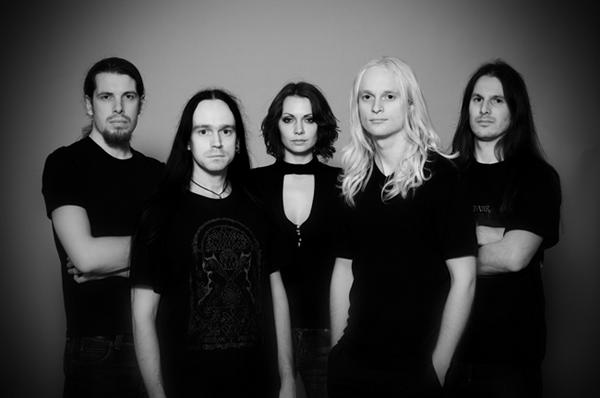
California's Queens of the Stone Age emerged from the rubble of the sudden split of seminal stoner rock band Kyuss in 1995, featuring an all-star lineup of sorts with Kyuss' guitarist Josh Homme joined by former members of Soundgarden, Monster Magnet and Screaming Trees.  The lineup didn't last long, and the band soon settled on personnel selected from the pages of Kyuss' history, with Josh leading the charge as frontman on guitar and vocals (although they've consistently featured additional guitarists and vocalists over the years) for their debut.  Over the years, they've gone through numerous lineups, including a tour of duty by someone you'll see mentioned around this blog repeatedly, drummer Dave Grohl, and minor contributions by such legends as Billy Gibbons of ZZ Top fame, Rob Halford from Judas Priest and Elton John who... well, is Elton John.  Queens of the Stone Age has garnered a great deal of commercial and critical success in their illustrious 17-year history, thanks largely to their genre-bending sound which features clear alternative, metal, punk, prog and psychedelic influences and appeals to a broad audience.  It doesn't hurt that they do it with convincing confidence and execution.


Queens' second album, Rated R, is my favorite of their work to date, although I'm not as well-versed in their later stuff as I should be.  It's a bold progression from the driving desert music of their debut (and Kyuss before them), adding a broader variety of styles and instruments while maintaining (or perhaps expanding on) the humor, driving rock feel and tripped out vibe: it's just so interesting and weird throughout.  To me, the album feels like a single, solid work, but I'm including "The Lost Art of Keeping a Secret", which stands on its own as a really enjoyable and interesting, if succinct, little song.  From the tidy drum intro to the subdued verse-section guitar riff with chord progression punctuated by vibraphone, into the alt-rock chorus (backed by bari sax), through the awesomely offbeat backing vocals, this is a fun and definitive tune, start to finish.  Enjoy!

Thursday, October 31, 2013

#57 - Pan.Thy.Monium


I mentioned some of the weirdness of To-Mera's song "The Lie" in my last post, but Sweden's Pan.Thy.Monium could give weird lessons to just about any musician.  They're also my first avant-garde metal entry since Sigh at number 95.  Pan.Thy.Monium is one of myriad projects by multi-instrumentalist and producer Dan Swanö, who can be heard on the excellent low vocals with Star One.  He's really more of a bit player on this one, playing bass and keys.  Other members include his brother Dag - who also plays with Dan in prog rock outfit Nightingale, Roberth Karlsson - probably best known for his vocals with Scar Symmetry, and Benny Larsson - drummer for another of Dan's projects,  prog-death metal band Edge of Sanity.


Pan.Thy.Monium includes some unusual instrumentation with violin and saxophone, but even more unusual is how they include it.  There's a lot of altissimo bari squealing and violin scraping that sounds like nails on a chalkboard.  Dan Swanö's keyboard often sounds like a $50 Casio, and Dag conjures images of the 70s as a hybrid of Tony Iommi and Terry Kath.  "The Battle of Geeheeb" is the opening track off of their third and final album from 1996, Khooohs and Kon-Fus-Ion.  This epic composition is chock full of driving riffs, none of them sticking around for more than 16 bars or so.  Just when you get your toe tapping to one (and they do usually have a catchy, head-bobbing feel), it switches to something completely different (if just as groovy).  Full disclosure, I have a tendency to like avant-garde music like this more than most, so I won't blame you too much if you don't dig it.  But at least give it a try.  As I've mentioned, I appreciate a little humor with my music, and these guys are a fun, smile-inspiring listen.

Wednesday, October 30, 2013

#58 - To-Mera


Another vastly under-appreciated band, To-Mera comes to us from England with some Hungarian roots.  To-Mera plays a somewhat unusual brand of technical progressive metal in that the characteristic lengthy songs and frequent time changes are colored by a overall gothic metal tone set primarily by the soprano vocals of talented Hungarian singer and front-woman Julie Kiss.  Equally unexpected are the occasional jazz interludes, solo piano and other compositional left turns that come out of nowhere from time to time in their music.  I first heard this band in 2006, shortly after the release of their debut album Transcendental, and fell in love with them right away.  Not only is their music inventive and unique, they play it impressively.


To-Mera's second album, Delusions, was released not long after the first and picked up where the debut left off.  If anything, it's more adventurous than Transcendental, with appearances by saxophone and bass clarinet, more frequent and jarring twists and turns and more ambitious songs, with the shortest clocking in at just a bit under six minutes.  Here's the opener, "The Lie", which gives a pretty good idea of what to expect from them should you give any of their other work a listen.  The tight, dry guitar and drum sound are characteristic, as are the spacey, wandering vocals and keyboards.  As challenging as the first couple of minutes are, it's just after the 2:00 mark that things start getting really weird, including the guitar solo which begins about a minute later and then the pseudo-orchestral section around 5:00.  An interesting and engaging song from a really unique and enjoyable band.

Sunday, October 20, 2013

#59 - King Diamond


King Diamond is a Danish band and vocalist, the former active since 1985 and the latter singing in the band and with a couple of prior acts dating back to mid-70s.  King is one of the definitive metal singers, well-known for his wide vocal range, vivid performance, frequent falsetto, grotesque face-paint and theatrical stage persona.  The band was formed when King split with seminal band Merciful Fate and joined up with a team of even more technically sound musicians, probably most notably the excellent neo-classical guitarist and ever-busy Andy LaRocque, who has produced and guested on countless albums, including the classic Individual Thought Patterns with Death, alongside his wingman duties throughout King Diamond's long career.


Probably the most interesting and unique aspect of King Diamond's music, aside from King's vocal histrionics, is the fact that the vast majority of their albums are almost like rock operas.  Concept albums are not all that uncommon, but this band's records actually chronicle stories with plot-lines and characters (King plays them all, with a wide range of voices and expressions).  Abigail was their second studio album and the first of these metal operas.  The story is a Lovecraftian haunted house tale, where a young couple moves into the house that eventually destroys them, while spawning the evil infant, Abigail.  The album is cohesive and well-performed.  "A Mansion in Darkness" is probably my favorite on it, although the record's even throughout.  You get a good feel for the songwriting and the vocal and instrumental style with this one, and I hope you get as much enjoyment out of it as I do.  If so, make sure to give the whole work a listen.