Monday, February 23, 2015

#33 - Judas Priest


One of the earliest and most important bands in the history of metal, Judas Priest not so much burst as eased on to the scene in and throughout the 1970's, starting with their foundation as a bar band in Birmingham, England in 1969 and culminating in their breakthrough record, British Steel in 1980, which featured mega-hits "Living After Midnight" and "Breaking the Law and also my daughter's favorite Priest song, "You Don't Have to Be Old to Be Wise"  (She's a year older than I was when that album was released!)  The band stayed at its commercial peak for a few years, which included album gems Point of Entry, Screaming for Vengeance and Defenders of the Faith, and singles "Heading out to the Highway", "You've Got Another Thing Comin'", "Electric Eye" and "Freewheel Burning".  As great as their output over those years was, I don't think I'd be that big a fan if it wasn't for their preceding and following phases.  In the 70's, they mixed all kinds of styles, covering songs by Joan Baez, Spooky Tooth and Fleetwood Mac, with a pioneering twin guitar sound and, for the time, astounding vocal range and vibrato.  Those early years influenced a host of thrash and NWOBHM bands for years that followed.  In the 90's, they recruited speed metal band Racer X's drummer, Scott Travis, whose level of technique was well beyond the rest of the band's, and twenty years after their formation, guitarists K.K. Downing and Glen Tipton buckled down and learned advanced lead guitar solo playing - particularly sweep picking - and upped the proficiency level of the band by a wide margin.  I've always been really impressed that they took the kind of time and expended the kind of effort that it must have taken to do that so late in their already successful careers, and that's one of the reasons I admire them as much as I do.


I mentioned Judas Priest's transformation over the years, and also their fantastic lead vocalist Rob Halford, who is unquestionably one of the most influential and talented singers in the history of heavy metal.  I'm going to give you a taste of both, with one of my favorites from their second album, 1976's Sad Wings of Destiny, "Victim of Changes" followed by one of their best from the first post-Scott Travis addition album, the title track to 1990's Painkiller.  Enjoy the classic progressive and the blistering speed metal of this seminal band.


Thursday, February 5, 2015

#34 - Metallica


For any of you wondering when you were going to get a band you've heard of, here you go.  Metallica may be the biggest name metal band of all time, and not without reason.  One of the earliest thrash metal bands, they generated considerable buzz in the burgeoning underground metal scene in 1982 thanks largely to their enormous energy on both stage and record.  Like a lot of people, I didn't hear Metallica until they already had three albums in the can, one of them certified gold, and had played shows for tens of thousands despite minimal radio play and having never (yet) released a music video during MTV's heyday.  Metallica wasn't just speed and bluster though.  Their first four albums, aside from their huge influence on the decades of heavy rock that have passed since, were musically inventive and flirted with some of the characteristics that became associated with progressive metal, specifically longer and more elaborate compositional forms, and use of mixed meters.  With their fifth album in 1992, Metallica changed direction, aiming for a more accessible and commercially viable sound, more obviously embracing their punk and alternative musical influences and the widespread acclaim that had built up around them.  I kind of lost interest in them soon after that, but for their fantastic first four albums and the fact that most modern metal has their stamp in it, Metallica remains one of my all-time favorite bands.


A lot of people view 1986's Master of Puppets album as Metallica's pinnacle, and I think an argument could probably be made for any of their first four.  For me, their recording career highlight is 1988's ...And Justice for All, probably because it's the most progressive of their releases.  The songs are long with frequent tempo changes, and the production is colder and more clinical sounding than on their earlier albums.  My favorite song on it, and probably my favorite in their entire catalog, was their biggest hit to date when it was released.  It's hard to imagine a song like this having the kind of popularity on release that it did then.  It's just too demanding of the listener.  "One" tells the story of a soldier horribly maimed in battle awakening from his coma to the realization that he's been left with no limbs or means of communication with the world around him.  The music tells the story as much as the lyrics, beginning peacefully, somewhat blearily, and rising to despair, desperation and finally rage perhaps tinged with madness.  It's a rare work, one in which popularity and art somehow managed to meet in the same place at the same time.  Give it a listen below, and I'll also include an old live performance from before their first album to give you a sense of why these guys were so infectious in their formative years.  As you watch it, contrast with what you can remember listening to in early 1983 (if you can remember that far back).


Sunday, February 1, 2015

#35 - Dream Theater


When one thinks of "Progressive Metal", if one knows that that actually is a thing, the first band one probably thinks of is the enormously influential New York band Dream Theater.  The last of the proverbial "Big Three" (along with prog metal godfathers Queensrÿche and Fates Warning), Dream Theater blew open the commercial doors typically closed to progressive metal in 1992, with their surprise hit "Pull Me Under" off of their second album, Images and Words.  Between their initial release, When Dream and Day Unite, and this follow up, they had jettisoned their first singer, Charlie Dominici, and settled on an approach with relatively wide appeal, embracing occasional rock ballads, occasional AOR anthems and, less occasionally, mind-boggling feats of musical acrobatics alike.


I've always held some ambivalence about Dream Theater.  There's no denying their incredible musicianship and technical prowess.  They've done as much as anyone in popularizing challenging rock music.  Aesthetically, though, I have a tough time with some of their music.  Some of it is just too croon-y and light for my taste.  I think my biggest problem is with long-time vocalist James LaBrie.  He's a gifted singer, no doubt, but his at-times breathy delivery is tough for me to take.  On the other hand, there are moments of true metal heaviness... in fact, pretty much all of the album Train of Thought rocks extremely hard, and is still rhythmically and formally imaginative.  And almost all of their albums at least have moments like that.  When they're good, they're among the best in the business.  Even when they're not, they're in the conversation.  For me, their highlights include the afore-mentioned Train of Thought, most of their third release Awake, and especially their EP A Change of Seasons, which follows.  As ever, all five members of the band are in rare form on this song.  In particular, you'll get a taste of band leader Mike Portnoy's soloistic drumming style (although he left the band in 2010).  It also features a lot of twisty instrumental ensemble sections and solos by smoking guitarist John Petrucci and personal favorite keyboardist and fellow Burbank resident Derek Sherinian.  It's my favorite DT moment (if you can call a 23 minute epic a "moment"), but every one of their thirteen albums is recommended, and for the best live video recording of a rock band I've ever seen, check out Live at Budokan.  Without further ado, here's the progressive metal masterpiece "A Change of Seasons".


Wednesday, January 28, 2015

#36 - Pride and Glory


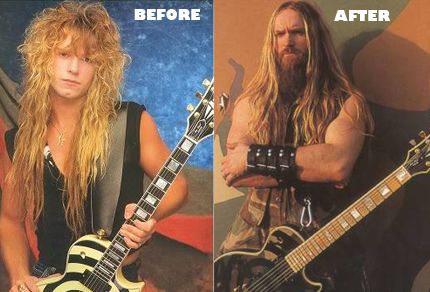
The first rock concert I ever went to was on August 3, 1989 at Irvine Meadows Amphitheater in the town to which I would move a year later to attend college, Irvine, California.  I, a high school senior, went to this concert with a recent grad friend of mine, Nick Gozdiff and another friend of his, whose name eludes me but who I can remember got drunk at the show and hit on a 12-year-old before passing out in the back seat of my car.  In retrospect, my willingness to drive was probably a big reason why these seasoned 18-year-olds were willing to go to a show with a lowly high schooler, in dumb awe of just about everything he witnessed that night.  Nick had been a school band member, a trombonist in fact, and a metal fan, so perhaps our similarities made it possible for him to tolerate my woeful lack of experience and sophistication.  The lineup for the night included openers, all-female hair band Vixen, all-male hair band White Lion and finally, headliner Ozzy Osbourne.  There are a handful of memorable stories from that fateful, magical night, but most memorable was the performance of another youngster, the then-22-year-old and relatively unknown guitarist in Ozzy's band, Zakk Wylde.


Zakk was (and is) a ridiculously good player with an enormous, crushing sound, unique approach to scalar soloing, impeccable technique, and that irresistible wailing harmonic squeal.  While his style certainly descends from legendary guitarists Randy Rhoads and Duane Allman, until 1988's No Rest For The Wicked album, no one had heard playing quite like his.


In 1991, Zakk started a side project with two guys from that tour that I was lucky enough to attend, bassist James LoMenzo and drummer Greg D'Angelo from White Lion.  They went on to produce one eponymous album in 1994 and a couple of contributions to compilations under Zakk's name prior to that, far too little output for what was truly a unique and highly talented band.  Their style was one I really haven't heard anywhere else, a sort of southern metal reminiscent simultaneously of country blues and classic heavy metal.  I can't recommend the album highly enough; Zakk's playing is top-notch and his vocals are surprisingly soulful, nuanced and capable.  He even plays banjo, mandolin and harmonica on it, and there are a couple of string orchestra accompaniments performed by the Seattle Symphony.  I'm including my favorite from the album, "Shine On", mainly my favorite because it features a monster jam with guitar solo for the second half of the track.  I'm also throwing in, as a bonus, "Farm Fiddlin'" from the Guitars That Rule The World compilation of 1991 because it's so much fun.


Sunday, January 25, 2015

#37 - Age of Nemesis


One of the more obscure acts on this long list of obscure acts, Hungarian prog-metal band Age of Nemesis released their first few albums domestically only, as not much of the outside listening world would have flocked to an album sung in Magyar.  Many of their works have since been translated into and recorded in English, and as far as I know, they've had three albums released internationally by Sensory and Magna Carta Records, two big fish labels in the small pond of progressive metal.  Nemesis is a bit of an anomaly, in that their albums are so polished they sound like a major player in the genre, but one can easily find references to so many small stage performances and cover versions of the metal standards, an inference can be made that they're essentially a really, really good cover band that has managed to get decent distribution on some of their original work.  As for their musical style, they're firmly in the prog vein... heavy on the keyboards, soaring and powerful high-pitched clean vocals, and impressively technical playing, particularly from guitarist and founder Zoltán Fábián.  While not particularly unique, I think they do it better than just about anyone else, and they tend toward a more driving rock sound than many others, recalling greats Deep Purple and Iron Maiden, and resulting in a sound that is just plain fun to listen to.


Age of Nemesis has grown more polished over the years, and the track I'm going to share is the opener from their third and most recent album (the English language version), Terra Incognita.  The song is called "Tree of Life" and, while not especially complex, is a fun listen, an impressive performance and a thoughtful composition.  I think the somewhat lengthy introduction does a nice job of setting up the vocal entrance and main song form.  I also like the variety of sounds you get from the guitar parts and to a lesser extent, the keys.  The vocals are really nicely done too, especially the multi-part harmonies in the chorus.  Check it out.  As I've been doing with some bands lately, I'm also going to throw in a cover of Deep Purple's "Burn", which not only rocks, but also cleverly offers a different interpretation of the main riff every time it's reintroduced throughout the song.  Again, a really fun recording.


Sunday, January 18, 2015

#38 - Anthrax


Anthrax was one of the most important metal bands of the 1980's.  Hailing from New York City, they pioneered the East Coast thrash metal sound, with a clearer punk influence than West Coast and European peers.  They also embraced the clean, high-pitched, wide vibrato vocals of much of the NWOBHM of their formative years, something that you didn't hear much of in the early music of contemporaries Metallica and Kreator.  Another characteristic of the band that became a staple of the NY thrash and metal scene was the levity in their song content and performance attire and demeanor. You can hear their musical and lyrical influence on later terrific NY bands Carnivore/Type O Negative and Scatterbrain to name a couple of my faves.  Another area where their enormous influence can be easily discerned is in the 90's rap/nu metal movement.  Anthrax was among the first bands to mix heavy metal and rap with 1987's "I'm the Man", paving the way for Faith No More, a Sir Mix A Lot and Metal Church collaboration, Body Count, and finally Rage Against the Machine in 1992 and the rap metal explosion that followed.  Credit to their NY compatriot Beastie Boys though, who were a clear influence on Anthrax at that time.  They also collaborated notably in the early 90's with Public Enemy on an excellent cover of "Bring the Noise"


As with most of the mid-eighties thrash and underground metal movement, I was late to the game with Anthrax.  I never really heard them until MTV picked them up for heavy rotation of "Antisocial" from their 1988 fourth album, State of Euphoria.  It was a good song and representative of their mid-eighties sound, as I soon learned when I delved into their back-catalog.  Their classic lineup broke up after the 1990 release of Persistence of Time, a heavier and more serious album then their previous work but no less enjoyable.  Well, maybe less enjoyable than 1987's Among the Living, which is top to bottom a fantastic album, with interesting and unusual lyrics for the genre and a similarly unique musical style, although as mentioned above, one that would influence a generation of crossover thrash metal artists.  On it, one can hear a song about the tragedy of John Belushi's death ("Efilnikufesin (N.F.L.)"), another based on comic book character Judge Dredd ("I am the Law"), two reworkings of Stephen King stories ("Among the Living" based on the novel, The Stand and "A Skeleton in the Closet, after the novella "Apt Pupil"), and the following classic lament for the lot of the native American.  Drummer Charlie Benante's opening nod to native American drumming, Joey Belladonna's wildly wailing (but pristine) vocals and the ultra-heavy "war dance" breakdown make "Indians" one of the best on an album full of bests.


Tuesday, January 13, 2015

#39 - System Of A Down


A very local band, and one of the most popular and well-known on this list, System of a Down hails from Glendale, California.  In fact, principal composer, guitarist and secondary vocalist Daron Malakian went to middle school at the same school my kids will likely attend.  Daron is the only member of the band who was born in the United States.  Singer Serj Tankian and drummer John Dolmayan were born in Lebanon and bassist Shavo Odadjian was born in Armenia, but all three immigrated to California as young children.  The band's lyrics tend to be politically charged, often focusing on American foreign and drug policies and social justice.  The songs "P.L.U.C.K.", from their 1998 debut and "Holy Mountains" from 2005 both decry and call on the Turkish government to acknowledge the Armenian Genocide carried out by the Ottoman Empire in 1915.  Musically, SOAD plays a quirky brand of alternative/nu metal.  The foundational style is one that generally doesn't appeal much to me, but their slant on it is so imaginative, experimental, angular and unexpected, that it's hard not to like.


SOAD's first two albums are wall-to-wall great songs, featuring more death metal grunts and growls than their later, more alternative rock offerings.  On the whole though, their sound has been pretty consistent over the past 17 or so years.  I remember hearing them live in Atlanta in 1999 and having a hard time getting a grasp on them, feeling ambivalent about both the lyrics and the music.  It took some time, but they definitely brought me around.  The turning point was probably when I heard their 2000 cover of Black Sabbath's "Snowblind", which remains one of my two favorite Sabbath covers of all time (along with Type O Negative's "Black Sabbath").  I was going to include an original, "Prison Song" from their second and breakthrough album Toxicity, which is a good example of their unique work, but I hate to pass up the opportunity to share the gem that is "Snowblind".  What the heck?  Here are both, "Prison Song" first, and then their original take on a classic.